An hour south-west of Seville, where the Guadalquivir meets the Atlantic, lies 500 square kilometres of lagoon, dune and pine forest.
Six million birds use it as a staging post between Europe and Africa every year. It is also the last place the Iberian lynx lives in the wild.
Of all the day trips from Seville this is the closest and the hardest to arrange yourself — not because of the distance, but because most of the park is closed to public access.
In short
- —About 90 km from Seville, roughly an hour each way — the nearest day trip of them all.
- —October to April is the season. In summer the wetlands dry out and the birds are gone.
- —The core reserve can only be entered on a guided 4×4 tour, booked in advance.
- —Bring binoculars. Without them the birds are dots.
01
What Doñana is
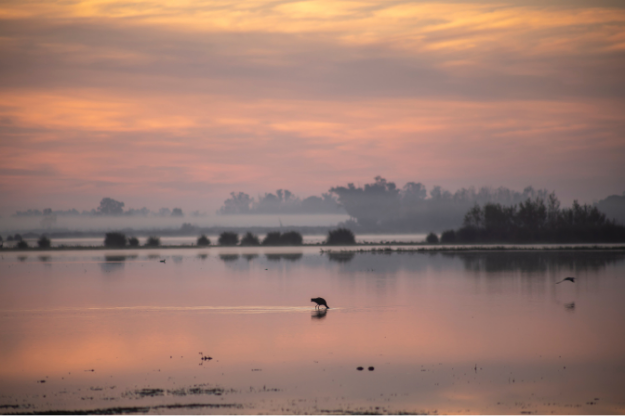
The delta where the Guadalquivir empties out. In winter the marismas — the flat plains — fill with water and become an enormous shallow lake. In summer they dry to cracked clay. That yearly swing is what makes the place so rich.
A UNESCO World Heritage site since 1994. It was protected in 1969, after plans to drain it for rice fields and hotel development came close to being carried out.
02
The birds
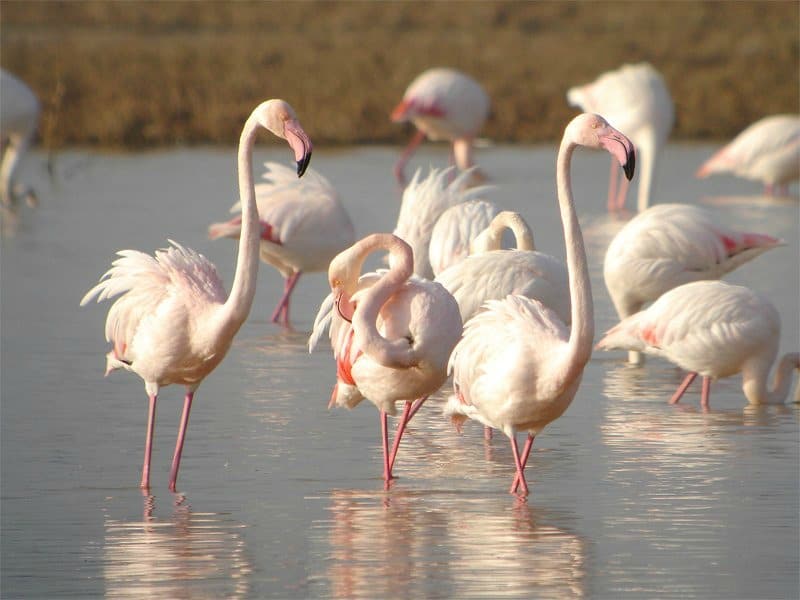
Six million birds pass through in a year. Flamingos in their thousands, spoonbills, grey and little egrets, kites and imperial eagles. In winter the lagoons fill with geese and ducks from northern Europe.
The Spanish imperial eagle exists only on the Iberian peninsula, and Doñana is one of its last strongholds — around twelve pairs nest here. Birds are active early in the morning and late in the afternoon, which is worth planning the day around.
03
The Iberian lynx
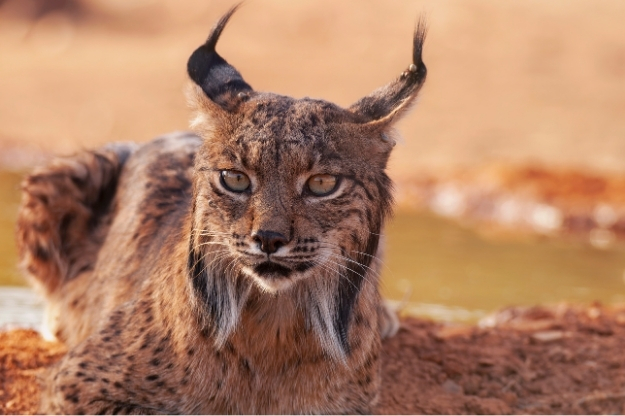
The most endangered cat in the world. In the 2000s the population fell below a hundred animals in total, all of them in Doñana and the Sierra Morena. After twenty years of breeding work the number is now above two thousand.
Your chance of seeing one is small — it is nocturnal and shy. Expect not to, and count it as a very good day if you do.
04
Wild horses and cattle
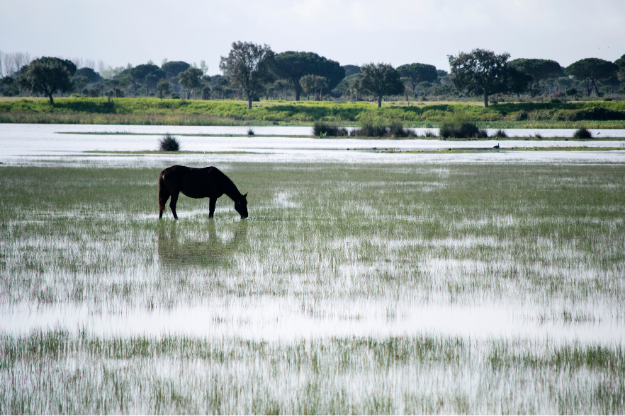
The marismeña horses live semi-wild in the wetlands. Every year at the end of June the Saca de las Yeguas drives them out of the park into the town of Almonte to be counted and sold, a tradition running since 1504. Retinta cattle also graze freely in parts of the park.
05
The dunes
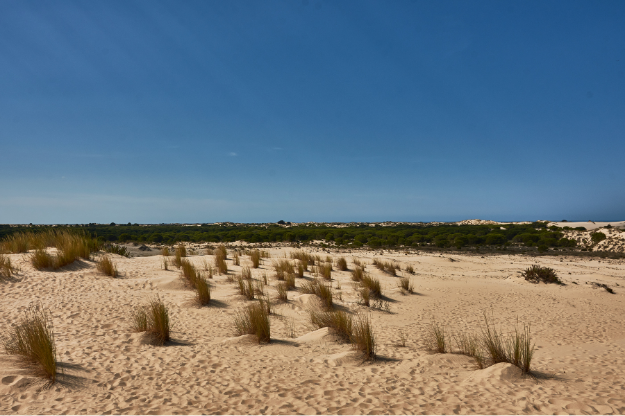
Along the coast, large dunes move inland by a few metres a year, burying the pine forest as they go. Dead crowns stand out of the sand in what are called corrales — the clearest picture of a landscape still in motion.
06
El Rocío
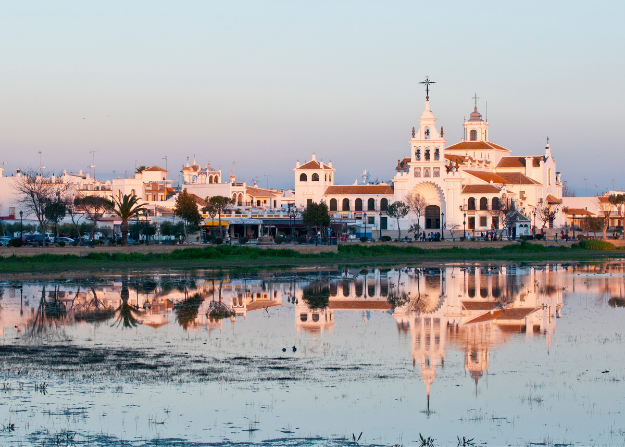
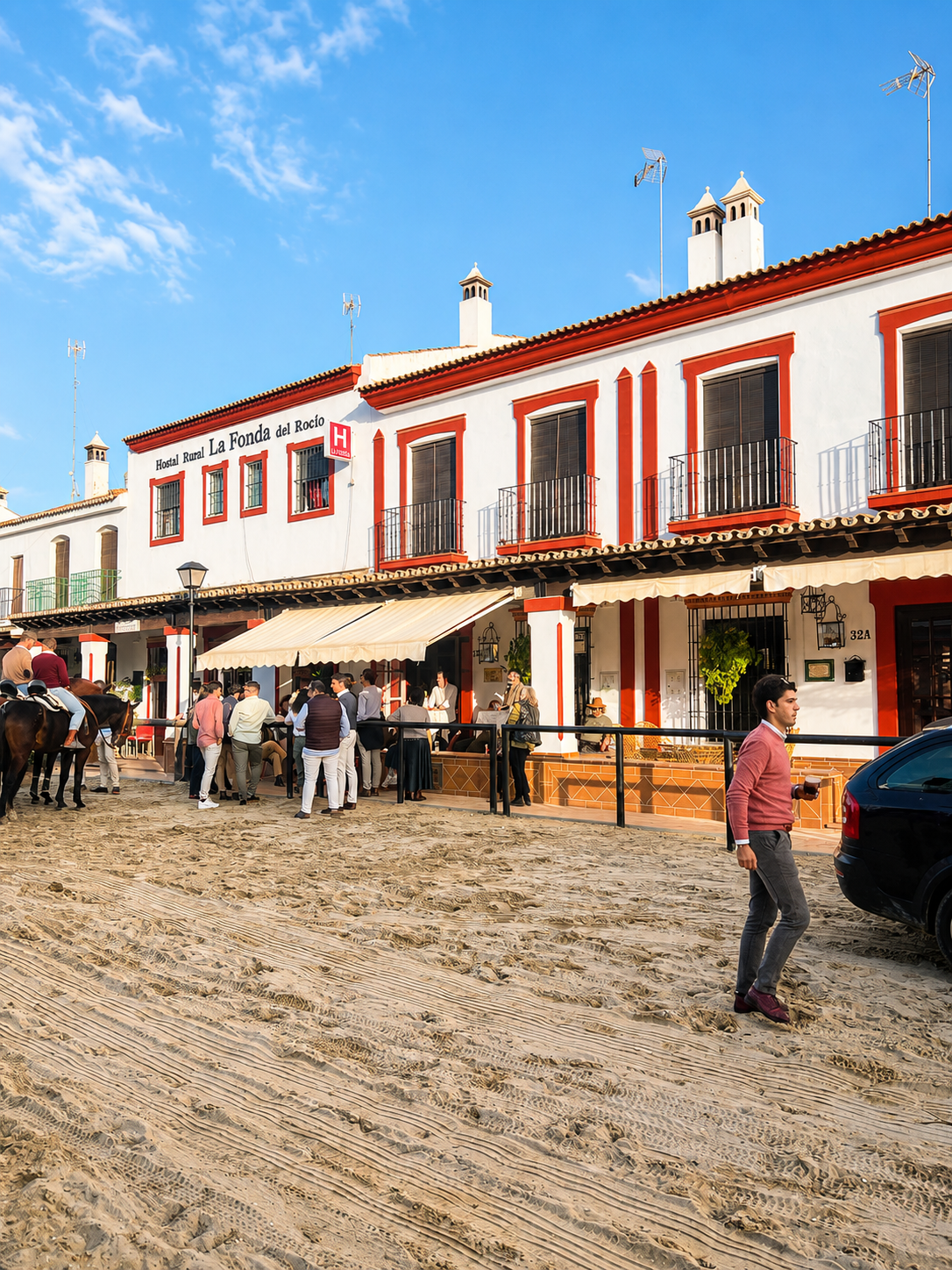
The village on the northern edge has sand streets instead of asphalt, because people arrive on horseback. At Pentecost close to a million pilgrims gather here in Spain's largest religious pilgrimage.
The rest of the year it is almost empty, with the lagoon spread out below the church square. It is one of the strangest places in Andalucía. If you are travelling at Pentecost, check the dates — the village is effectively unreachable then.
07
How you get in
Large parts of the park are closed to public access. You enter on a guided four-wheel-drive tour from El Acebuche or Matalascañas — four hours, morning or afternoon, booked ahead — or on marked paths from the visitor centres.
The visitor centres at La Rocina, El Acebuche and Palacio del Acebrón are free, open to everyone, and have hides looking out over the lagoons. You see a great deal from them. A boat from Sanlúcar de Barrameda on the southern side gives a different angle again, upriver into the delta.
Getting there, and planning the day
By car it is an hour from Seville to El Rocío on the A-49 and A-483. Damas coaches run to Matalascañas and El Rocío several times a day from Plaza de Armas and take about an hour and a half.
Arriving under your own steam, the combination that works is La Rocina visitor centre in the morning while the birds are active, El Rocío in the middle of the day, and the hides at El Acebuche in the late afternoon. The core reserve still needs the booked 4×4.
Doñana is not spectacular the way a mountain or a cathedral is. It is flat, quiet and understated, and you have to look. Come expecting a safari and you will be disappointed; come with binoculars and some patience and you will see things that exist nowhere else in Europe. We can pair it with lunch on the Huelva coast, or a stop at Jabugo for ham on the way back — say which and we will build the day around it.
Mistakes worth avoiding
- —Coming in July or August. The wetlands are dry, the birds have gone and the heat sits still.
- —Expecting to drive in yourself. The core area needs a guided 4×4, booked in advance.
- —Arriving without binoculars. The birds are distant.
- —Expecting to see a lynx. It is nocturnal and shy.
- —Travelling at Pentecost, when El Rocío holds close to a million pilgrims.
- —Going out in the middle of the day, when the birds are least active.
Frequently asked questions
{{ f.q }}+
{{ f.a }}

Written by
Gunvor Guttormsen
Licensed tour guide · Seville
Gunvor is an officially licensed guide based in Seville and the founder of Flavors of Andalucia. She guides in English and Norwegian, and also in Swedish and Danish, and has spent years walking the markets, bodegas and back streets she writes about here.
More about Gunvor